Racing Game Tips for Beginners: Brake Later, Crash Less, Win More
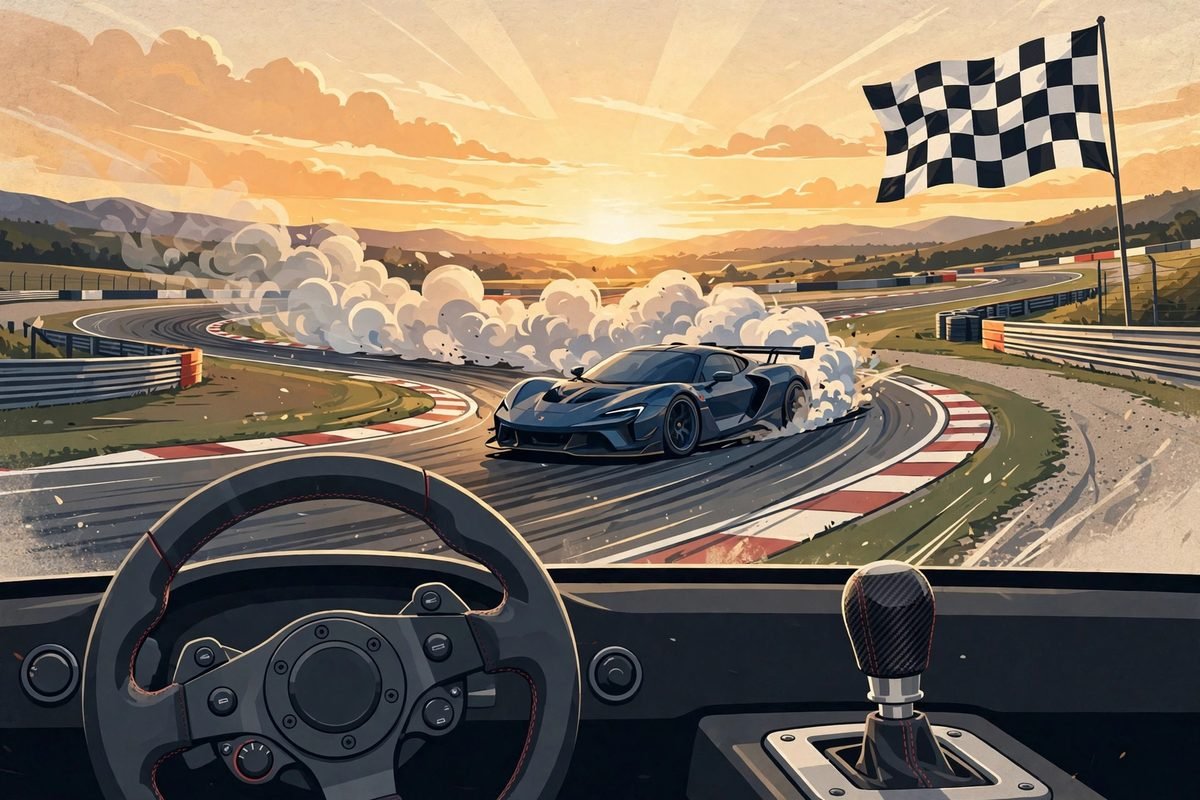
My first racing game ended the way most first racing games end: in a wall. Then another wall. Then a different wall, just for variety. I was treating the accelerator like an on-off switch — flat out until something went wrong, then panic-braking — and wondering why everyone else was faster. The truth, which took me an embarrassing number of crashes to learn, is that racing games aren't won by going fast. They're won by not crashing, and speed is what happens naturally once the crashing stops. Here's everything I wish I'd known before that first wall.
1. Brake Before the Corner, Not In It
This is the single biggest thing, and it's the opposite of what your instincts say. Your instincts say: stay fast as long as possible, then brake hard at the corner. The fast players do the opposite: they brake early, in a straight line, before the corner even starts — then they coast through the turn and accelerate out of it. It looks slower. It's much, much faster.
Why? Because a car (or bike) that's braking can't turn properly. The tyres are busy slowing down, and asking them to also change direction is asking for a slide into the wall. Brake in a straight line, and all the grip goes to slowing down. Turn with the brakes off, and all the grip goes to turning. In Turbo Lane Dodger, this translates to a simple rule: when you see a tight gap ahead, ease off before you reach it, steer smoothly through, and only accelerate once you're lined up straight again. The players who brake late and swerve are the players decorating the barriers.
Pick a braking marker — a sign, a shadow, a change in the road — and brake at the same spot every lap. Consistency beats bravery. The first few times you'll brake too early and feel slow. That's fine. Move the marker a little later each lap until you find the latest point where you can still make the corner cleanly. That's your braking point, and it's worth more than any amount of courage.
2. The Racing Line: The Shortest Fast Way Round
Every corner has a line through it — the path that lets you carry the most speed — and it's almost never the middle of the road. The racing line goes wide on the way in, clips the inside of the corner at its tightest point, and runs wide again on the way out. It looks like a curve, and it is: you're straightening the corner out, making it gentler than it appears.
In practice, in a game like Desert Dune Racer, that means approaching a right-hand bend from the left side of the track, cutting across to kiss the inside edge at the middle of the bend, and letting the vehicle drift back out to the left as you accelerate away. The first time you do it properly, it feels like cheating — the corner that used to demand a crawl suddenly flows at speed. It's not cheating. It's geometry, and it's the single fastest thing a beginner can learn.
Here's how to practise it: for one whole session, forget about winning and focus only on the line. Take every corner wide-in, tight-middle, wide-out, even if it costs you positions. You'll finish last, and you'll learn more in that one session than in ten races spent fighting for places. The line is the foundation; the racing comes after.
3. Smooth Steering Beats Fast Steering
Watch a beginner steer and you'll see jerky, panicked movements — yank left, yank right, overcorrect, crash. Watch a good player and their steering looks almost boring: small, smooth, early inputs, with the vehicle flowing where they want it to go. Smoothness is speed, because every jerky input scrubs off speed and unsettles the vehicle.
The trick is to steer early and gently. In Moto Mountain Trial, where balance matters as much as direction, a smooth lean beats a violent swerve every time — the bike stays settled, the tyres keep their grip, and you arrive at the next obstacle in control instead of in chaos. Think of your steering like turning a volume knob, not flicking a light switch: gradual, deliberate, and always with a sense of where you want to end up.
A practical drill: play a round where you hold the steering in each direction for a full second instead of tapping it. It will feel sluggish at first, and then you'll notice something — you're crashing less, because you're committing to a direction instead of wavering. Commit early, steer smoothly, and trust the line. The crashes will drop away, and with them, the frustration.
4. Traffic, Obstacles and the Art of Not Panicking
Most racing crashes don't happen in corners — they happen in traffic, when another vehicle appears suddenly and the player panics. The panic swerve is the deadliest move in racing games: it feels like the only option, and it almost always makes things worse, throwing you into the next obstacle or off the road entirely.
The cure is looking further ahead. In Turbo Lane Dodger, don't look at the car directly in front of you — look two or three cars ahead, at the gaps between them. Your brain is remarkably good at spotting a route through traffic if you give it the whole picture; it panics when it only sees the danger right in front of it. The gap you need is usually there, one lane over, and you'll see it early enough to move smoothly if you're looking far enough ahead.
And when a crash is genuinely unavoidable, do the boring thing: brake, straighten up, and take the hit slowly rather than swerving into something worse. A small crash you drive away from costs you a second. A panic swerve into a wall costs you the race. Choose the small crash. Every time.
5. A Beginner's First Week: The Plan
Here's a week that will take you from walls to podiums. Day one and two: Turbo Lane Dodger, focusing only on braking before obstacles and looking two cars ahead. Don't worry about your score — worry about finishing without crashing. Day three and four: Desert Dune Racer, practising the racing line on every corner, wide-in and wide-out. Day five: Moto Mountain Trial, for smooth steering and balance. Day six: put it together in a race, and notice how different it feels — calmer, smoother, faster.
Track your finishes rather than your wins. A beginner who finishes every race in the middle of the pack is learning faster than a beginner who wins one race by luck and crashes out of the next five. Consistency first, speed second, winning third — in that order, always.
And one last thing: be patient with yourself. Everyone's first week in racing games is a festival of walls. The players who end up fast aren't the ones who never crashed — they're the ones who crashed, figured out why, and changed one thing. Brake earlier. Take the line. Steer smoothly. Look ahead. That's the whole game, and it's enough to carry you a very long way.
Frequently Asked Questions
How do I stop crashing in racing games?
Brake before corners, not in them, steer smoothly instead of jerking the wheel, and look two or three obstacles ahead rather than at the one right in front of you. Most crashes come from late braking and panic swerves. Slow down earlier than feels necessary and you'll finish more races — and finishing races is how you learn to win them.
What is the racing line?
The racing line is the fastest path through a corner: wide on the way in, tight at the inside edge in the middle, and wide again on the way out. It straightens the corner, letting you carry more speed. Practise it deliberately for a session without worrying about your position — the line is the foundation everything else is built on.
Should I brake or steer when something appears suddenly?
Brake first, in a straight line, then steer smoothly once you've slowed. Swerving at full speed almost always makes things worse. And look further ahead: the gap you need is usually visible two or three cars ahead, and seeing it early lets you move smoothly instead of panicking at the last second.
Is a keyboard or touch better for racing games?
A keyboard is usually better for racers, because physical keys give crisp, reliable steering and let you hold a direction while tapping another key. Touch works well for simpler dodging games, but for anything with real corners and traffic, the keyboard's precision wins. Either way, commit to one input for the session rather than switching mid-race.
How long does it take to get good at racing games?
Most beginners see a big improvement within a week of focused practice — mainly from crashing less rather than going faster. Within a month of regular play, the racing line and early braking become habit, and that's when podiums start happening. Track your finishes, not just your wins: consistency is the real measure of progress. More racing and driving guides are waiting on the Gomen articles hub.